Course Roadmap and Certification Expectations
Course Roadmap and Certification Expectations
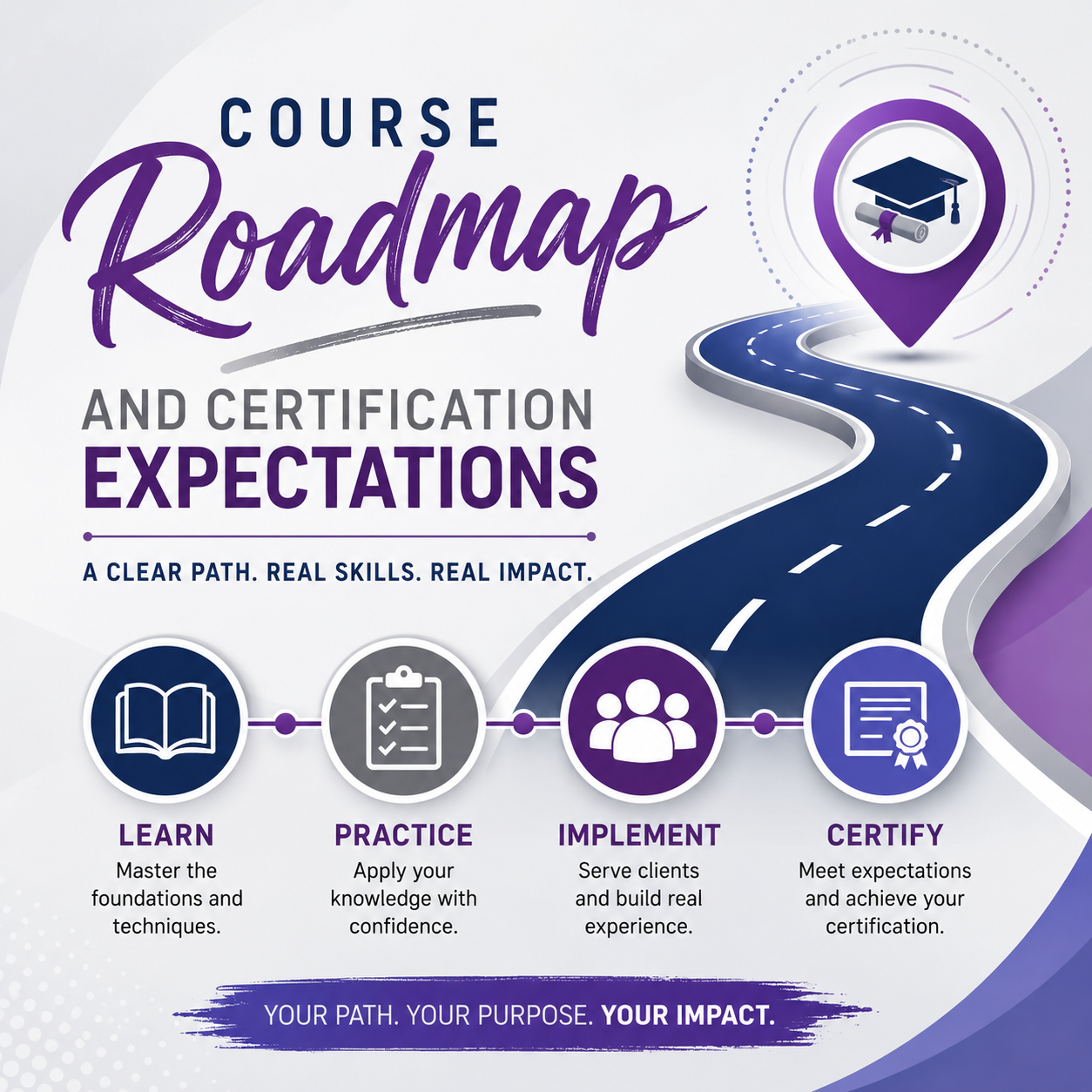
The Certified Holistic Trichology Practitioner™ program at VitalRoots Academy | RXHair Fix is designed to guide you step by step through the science, observation, and holistic understanding of hair and scalp health. This course is structured so you can build your knowledge gradually—starting with the basics and moving into real‑world skills you can use with clients.
You will begin by learning the basic science of hair and scalp health, including the anatomy of the scalp, the structure of the hair follicle, and the natural hair growth cycle. These foundations help you recognize what a healthy scalp and healthy hair should look like.
As you move forward, you will explore common hair and scalp conditions, including different types of alopecia, scalp inflammation, and lifestyle factors that can affect hair growth. This section helps you understand the many possible reasons someone may experience hair loss or scalp discomfort.
The curriculum also introduces you to holistic health factors that influence hair growth. You will learn how nutrition, stress, hormones, digestion, and daily habits can impact the hair follicle and the overall scalp environment. This allows you to see hair and scalp concerns from a whole‑body perspective, not just a cosmetic one.
You will then learn how to conduct a professional hair and scalp consultation. This includes how to ask the right questions, how to observe scalp and hair conditions, and how to notice patterns that may explain what your client is experiencing. You will be introduced to basic scalp analysis techniques and tools commonly used by trichologists.
An important part of the course focuses on supportive care strategies. You will explore scalp care routines, healthy hair practices, nutritional support, and lifestyle habits that may help create a healthier environment for natural hair growth.
Toward the end of the program, you will practice putting everything together. You will review case examples, identify possible contributing factors to hair and scalp concerns, and demonstrate your understanding of the material through a final assessment.
Certification Expectations
To successfully complete this program and earn the Certified Holistic Trichology Practitioner™ designation, you are expected to:
- Watch and study all course modules and lesson materials
- Complete lesson quizzes and review exercises
- Participate in course discussions or reflection activities when provided
- Demonstrate understanding of key hair and scalp concepts
- Complete the final course assessment or examination
Once you have met these requirements, you will receive a Certificate of Completion, recognizing you as a Certified Holistic Trichology Practitioner™ through VitalRoots Academy.
It is important to understand that this certification provides education in hair and scalp health and does not replace medical training. Graduates are expected to work within their professional scope and to collaborate with healthcare professionals when a medical condition is suspected.
What a Trichologist CAN Do
A certified trichologist may:
- Examine the scalp and hair using visual tools such as scalp scopes or microscopes
- Identify visible scalp issues such as dryness, buildup, flaking, inflammation, or breakage
- Educate clients about proper hair and scalp care routines
- Recommend non‑medical treatments and products that support scalp health
- Discuss lifestyle factors that influence hair growth, such as nutrition, stress, sleep, and hair care habits
- Track changes and progress in a client’s hair and scalp over time
- Create supportive hair and scalp wellness plans
These services focus on creating a healthy scalp environment that supports the best possible conditions for natural hair growth.
What a Trichologist CANNOT Do
A trichologist should never:
- Diagnose medical diseases
- Prescribe medication
- Claim to cure hair loss conditions
- Perform medical procedures
- Replace the role of a licensed medical professional
Medical diagnosis and treatment must always be provided by licensed healthcare providers.
When a Client Should Be Referred to a Doctor
A responsible trichologist knows when to recommend medical evaluation. Referral is appropriate if a client experiences:
- Sudden or severe hair loss
- Bald patches or scarring on the scalp
- Pain, swelling, or signs of infection on the scalp
- Hair loss related to hormonal or autoimmune conditions
- Hair loss connected to medications or serious illness
In these situations, the trichologist should encourage the client to see a:
- Dermatologist
- Primary care physician
- Endocrinologist
- Other appropriate medical specialist
The Power of Professional Collaboration
The best outcomes often happen when trichologists and healthcare professionals work together.
Trichologists can:
- Notice early signs of hair and scalp changes
- Help clients improve their scalp care routines
- Support lifestyle changes that may benefit hair health
- Encourage clients to seek proper medical evaluation when needed
This collaborative approach helps clients receive complete care for both cosmetic and medical aspects of their hair and scalp concerns.
Key Principle for Students
A simple way to remember this:
Trichologists support scalp health.
Doctors diagnose and treat medical conditions.
By staying within your professional scope and collaborating with healthcare professionals, you can provide safe, ethical, and effective care for your clients.
0 comments