The Role of the Modern Holistic Trichologist
The Role of the Modern Holistic Trichologist
A modern holistic trichologist is a trained professional who studies the health of the hair and scalp while also considering the overall health of the body. Instead of focusing only on hair products or styling, a holistic trichologist looks deeper to understand why changes in the hair may be happening.
Hair is closely connected to the body through the scalp and the hair follicle. Factors such as stress, poor nutrition, hormonal changes, illness, medications, and lifestyle habits can influence hair growth and scalp health. Because of this connection, holistic trichologists approach hair concerns from a whole-body perspective.
One of the main responsibilities of a trichologist is to observe and analyze the scalp and hair carefully. This may include examining the scalp condition, checking hair density, and asking detailed questions about a client’s health history, diet, stress levels, and hair care practices. These steps help identify possible triggers that may be contributing to hair thinning, breakage, or scalp irritation.
Holistic trichologists also focus heavily on education and prevention. They guide clients toward healthy scalp care routines, balanced nutrition, stress reduction practices, and supportive hair care habits that help protect the hair follicles and encourage a healthy scalp environment.
The Difference Between a Trichologist and a Dermatologist
While both professionals work with hair and scalp conditions, their roles are different.
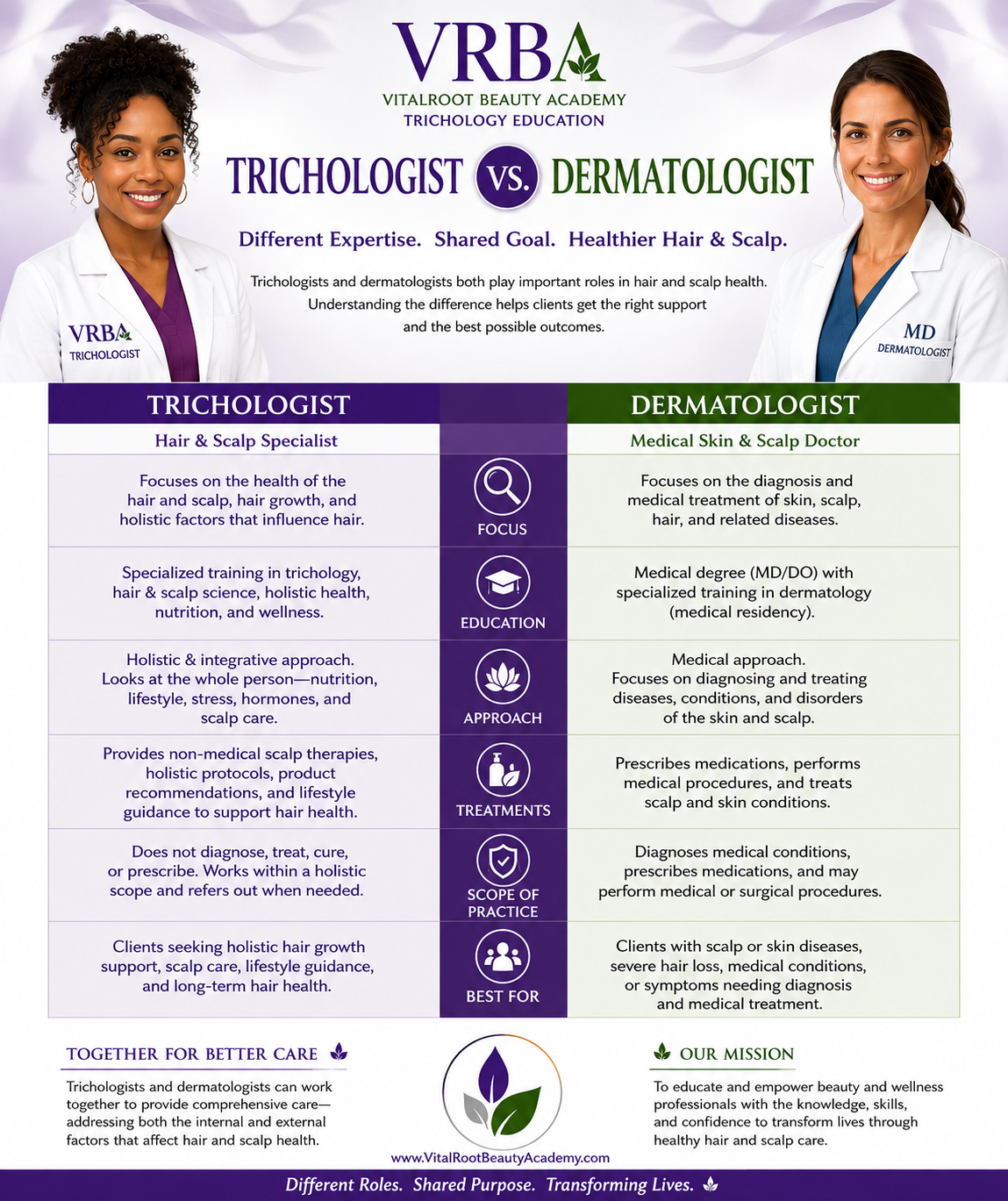
A trichologist specializes in the study of hair and scalp health. They focus on identifying possible lifestyle, environmental, and nutritional factors that may affect hair growth. Trichologists provide scalp analysis, education, and supportive care recommendations to help improve hair and scalp conditions.
A dermatologist, on the other hand, is a medical doctor who specializes in diseases of the skin, hair, and nails. Dermatologists are licensed to diagnose medical conditions, perform medical procedures, and prescribe medications for scalp disorders such as severe psoriasis, infections, or autoimmune hair loss conditions.
In many situations, these two professionals can work together. A trichologist may identify patterns or concerns that require medical attention and refer a client to a dermatologist when necessary. Likewise, dermatologists may treat a medical condition while a trichologist helps the client improve scalp care routines and lifestyle habits that support long-term hair health.
The goal of the modern holistic trichologist is to support the natural function of the scalp and hair follicle, helping clients restore balance and create an environment where healthy hair growth can occur.
In simple terms, the trichologist focuses on education, scalp health, and supportive care, while the dermatologist focuses on medical diagnosis and treatment.
0 comments