What Is Trichology? The Science of Hair and Scalp Health
What Is Trichology? The Science of Hair and Scalp Health
..What Is Trichology?
The Science of Hair and Scalp Health
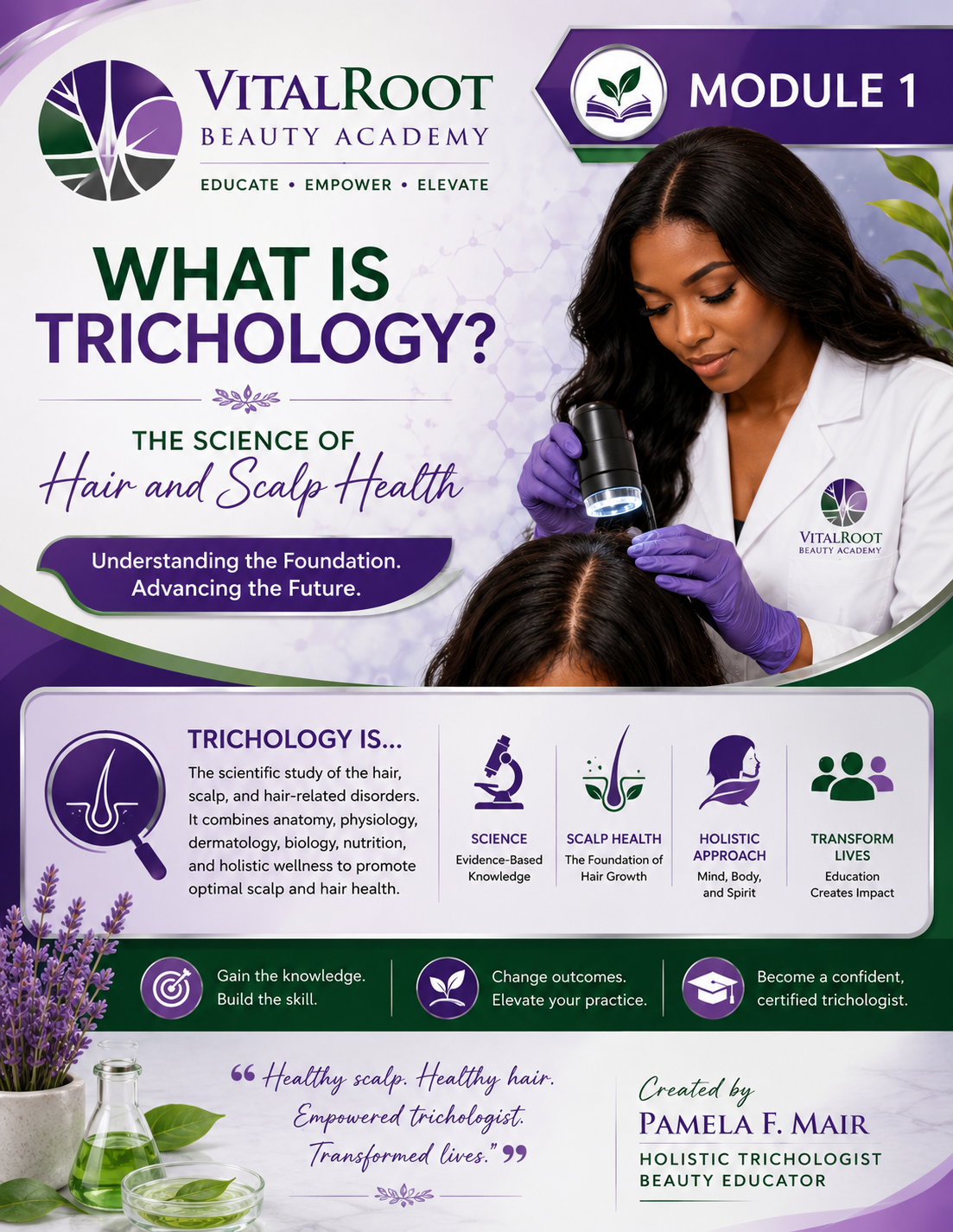
Trichology is the scientific study of the hair and scalp. It focuses on understanding how hair grows, why hair loss occurs, and how the scalp functions as the foundation for healthy hair. A trichologist studies the structure of the hair strand, the condition of the scalp, and the many internal and external factors that affect hair growth.
Hair does not exist on its own. It is connected to the body through the hair follicle, which is a tiny structure located inside the scalp. The follicle receives nutrients, oxygen, and hormonal signals from the bloodstream. Because of this connection, the condition of the hair can often reflect what is happening inside the body.
For example, issues such as stress, poor nutrition, hormonal changes, illness, medications, and inflammation can all affect the hair growth cycle. This is why trichology looks at hair health from a whole-body perspective, not just what is happening on the surface of the scalp.
A trained trichologist learns how to examine the scalp, identify patterns of hair thinning or hair loss, and help clients understand possible causes of their condition. They may recommend changes in lifestyle habits, nutrition, scalp care routines, and hair practices that support a healthier scalp environment.
It is important to understand that trichologists do not diagnose medical diseases or prescribe medications. Instead, they work alongside healthcare professionals when necessary and focus on education, scalp analysis, and supportive care strategies to help improve hair and scalp health.
In simple terms, trichology helps answer three important questions:
• Why is the hair changing?
• What is happening in the scalp or body that may be causing it?
• What supportive steps can help restore healthier hair growth?
By studying trichology, students begin to see that healthy hair is not only about styling or products. It is about understanding the biology of the scalp, the health of the body, and the daily habits that influence hair growth over time.
At VRBA we have create a method or system for easy learning during this course:
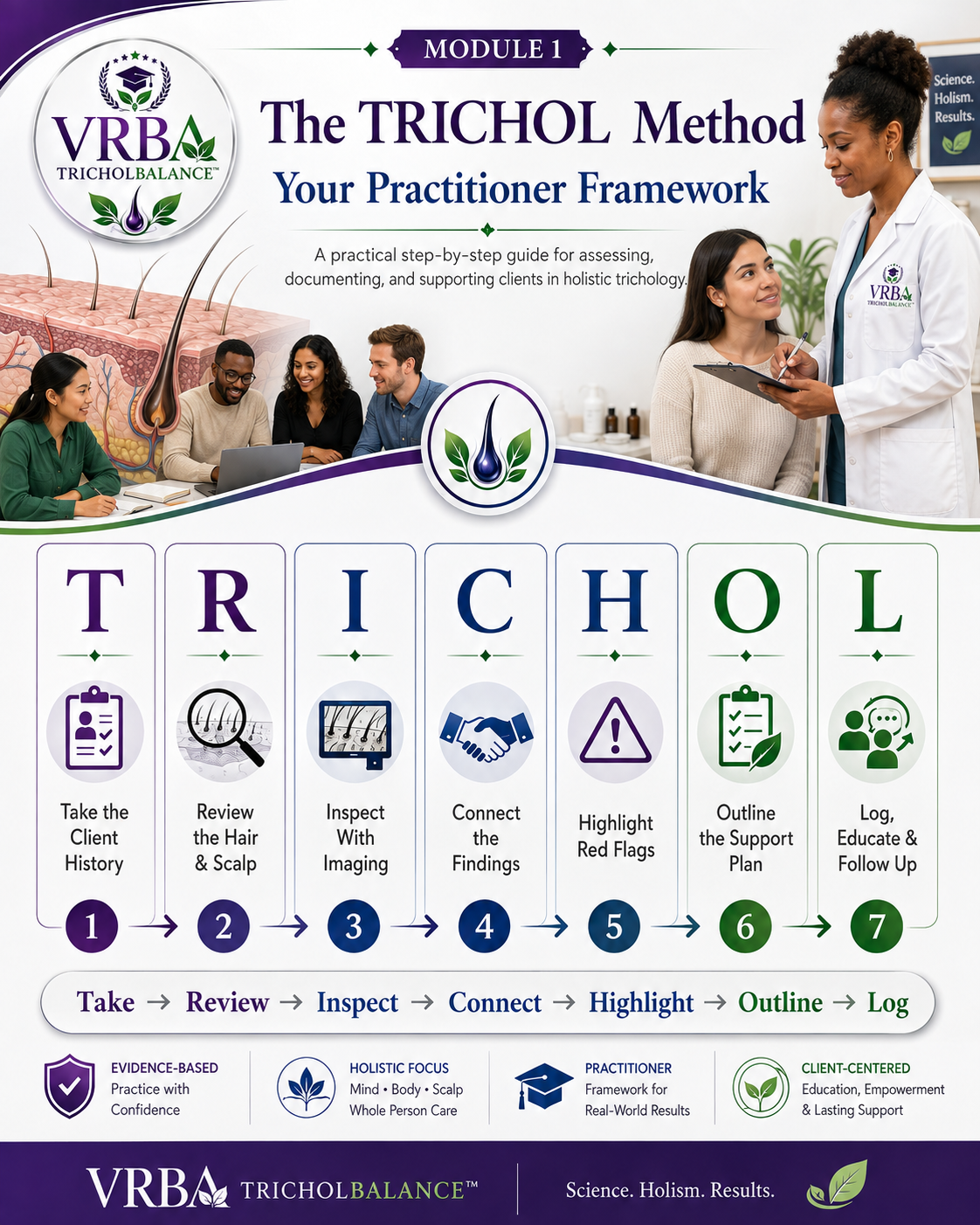
The TRICHOL Method: Your Practitioner Framework
From the beginning of the VRBA TricholBalance: Certified Trichology for the Modern Practitioner program, students will be introduced to the TRICHOL Method—a practical framework designed to guide the way you think, assess, document, and support clients throughout your training.
The TRICHOL Method will be used across the curriculum and later reinforced during the In-Person Clinical Competency. It gives students a consistent process to follow so that client care remains organized, professional, holistic, and within scope of practice.
T — Take the Client History
Gather information about the client’s hair, scalp, medical history, medications, nutrition, lifestyle, stress, sleep, hormonal changes, family history, and hair-care practices.
R — Review the Hair & Scalp
Perform a systematic assessment of the scalp and hair, including density, shedding, breakage, scalp condition, follicular openings, and visible patterns.
I — Inspect With Imaging
Use digital scalp imaging or magnification when appropriate to closely examine the scalp, follicles, and hair shafts and establish a documented baseline.
C — Connect the Findings
Compare what you observe with what the client reports. Look for relationships between the client’s history, lifestyle, internal health, hair-care practices, and scalp or hair findings.
H — Highlight Red Flags
Identify findings that may require medical evaluation, contraindicate a service, or fall outside the trichologist’s professional scope.
O — Outline the Support Plan
Develop a realistic, individualized holistic support plan based on the client’s findings, needs, lifestyle, and referral requirements.
L — Log, Educate & Follow Up
Document findings professionally, educate the client, record recommendations, establish progress measurements, and schedule appropriate reassessment.
Remember the TRICHOL Process
Take → Review → Inspect → Connect → Highlight → Outline → Log
As you progress through each module, you will learn the knowledge and skills needed to complete each part of this framework with greater confidence.
The goal is not simply to memorize information. The goal is to learn how to think like a professional holistic trichology practitioner—gathering the complete picture, recognizing what is within your scope, knowing when to refer, and creating safe and appropriate next steps for the client.
Key Learning Concepts
• Trichology is the science and study of the hair and scalp.
• Hair health is connected to nutrition, hormones, stress, and lifestyle habits.
• The scalp is living tissue, and healthy follicles are necessary for healthy hair growth.
• Trichologists help identify possible causes of hair loss and support scalp health through education and holistic care.
0 comments